
Gout Beyond the Big Toe: Recognizing Uncommon Symptoms
February 3, 2026 | Rheumatic Disease

A deep dive into how gout can affect other joints and organs
When most people think of gout, they picture a sudden, intensely painful big toe—red, swollen, and throbbing, often developing in the middle of the night. While that’s the classic image of gout, it can affect many joints in the body, not just the toe. Gout is caused from the buildup of uric acid crystals in and around your joints. These crystals cause inflammation leading to the pain and swelling.
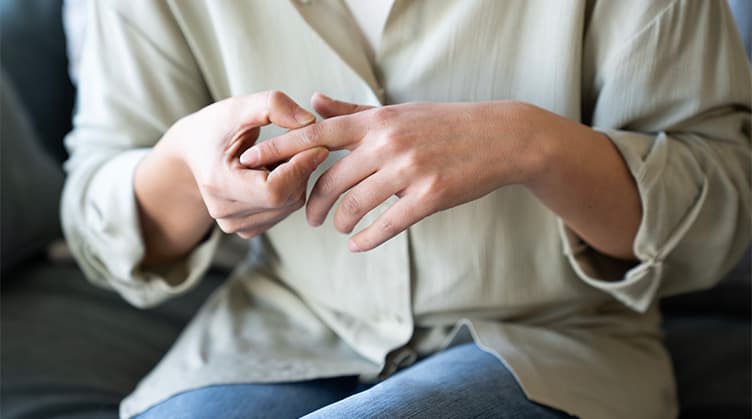
Gout in women often looks different than in men. Generally, gout occurs later in life for women and in contrast to men, may affect the upper extremities first. Sometimes, it can be mistaken for osteoarthritis, especially in the hands. However, unlike the hard, bony bumps seen in arthritis, gout may cause soft lumps under the skin filled with a chalky substance. These are called tophi. Certain medications, like diuretics (often used to treat high blood pressure), can increase the risk of developing gout.
In more advanced stages, gout can even look like rheumatoid arthritis. Both conditions can cause joint damage from inflammation and soft nodules, which can make them hard to tell apart. It is important to recognize the right diagnosis as the treatments are very different.
Gout can also rarely affect the spine. This can lead to pain, stiffness, and can even cause pressure on the nerves causing numbness or tingling. These patients could also have a fever or elevated inflammatory markers making physician concerned that they could have an infection at first.
Even more surprisingly, gout crystals have also been seen outside of joints in different organs. While unusual, gout crystals have been seen on heart valves or even the eyes. More commonly, gout can cause lumps to form under the skin.
While many people have heard of the typical signs of gout, these uncommon cases often go unrecognized. If someone has joint pain that doesn’t seem to follow the usual pattern or isn’t responding to typical treatments, it’s worth considering that gout could be the cause.
Recognizing that gout isn’t always confined to the big toe is crucial for early diagnosis and effective treatment. Its ability to mimic other conditions—like osteoarthritis, rheumatoid arthritis, or even infections—can delay proper care and lead to unnecessary discomfort or complications. By staying aware of these lesser-known symptoms and how gout can affect different joints and organs, patients and healthcare providers alike can take proactive steps toward accurate diagnosis and targeted management. Gout may be more complex than commonly believed, but with greater awareness comes the power to better manage and live well with this condition.

About the Author
Rebecca A. Fitzpatrick, MD
Dr. Rebecca Fitzpatrick is a board-certified rheumatologist with training in internal medicine and rheumatology. She earned her undergraduate degree from the University of Texas at Austin and her medical degree from Texas A&M College of Medicine. She completed her internal medicine residency at Rush University Medical Center in Chicago, serving as chief resident, and her rheumatology fellowship at Johns Hopkins University.
An active member of the American College of Rheumatology, Dr. Fitzpatrick has contributed to research on psoriatic and inflammatory arthritis. Her clinical interests include rheumatoid arthritis, psoriatic arthritis, spondylarthritis, gout, and vasculitis. She is committed to providing high-quality, patient-centered care.